With Babylon Central coming out today, I decided to post the final clip that has been placed on-line prior to it’s release. I look forward to receiving my copy.
|| 7/27/2010 || 10:28 am || + Render A Comment || ||
YouTube Video Clip of the Driving Scene from Babylon Central
With Babylon Central coming out today, I decided to post the final clip that has been placed on-line prior to it’s release. I look forward to receiving my copy.
|| 7/14/2010 || 2:54 pm || + Render A Comment || ||
A New Strategy For Full Representation in Congress: Have the District of Columbia Government Sue State Legislatures
Last night I received an e-mail from Timothy Cooper, executive director of World Rights, about his recent appearance on NewsChannel 8 and decided to save the video to publish here. The thrust of the new strategy is to have the District government sue the State legislatures around the United States for denying District residents full representation in Congress using international law as the basis for this lawsuit. The strategy is quite novel and I’m curious to see how this turns out.
|| 7/4/2010 || 12:01 pm || 4 Comments Rendered || ||
YouTube Video Showing Where George Washington Grew Hemp at Mount Vernon
In May I had the opportunity to participate in first annual Hemp History Week. From printing up an old newspaper article showing how hemp was used in the Civil War to taking a field trip to George Washington’s farms in Mount Vernon, Virginia, I had a great time learning about America’s historical use of hemp.
In the video above, I make a cameo at the beginning and later in the video the editor included a map of Mount Vernon from the Library of Congress that I submitted for inclusion in the video. The map nicely corresponds to the map shown during the interview at Mount Vernon.
When we arrived at Mount Vernon, the staff had prepared copies of a statement concerning George Washington’s cultivation of hemp at Mount Vernon. Below is a transcription of the document:
Throughout his lifetime, George Washington cultivated hemp at Mount Vernon for industrial uses. The fibers from held excellent properties for the making of rope and sail canvas, which was a major in the age of sailing ships. In addition, hemp fibers could be spun into thread for clothing or, as indicated in Mount Vernon records, for use in repairing the large seine fishing nets that Washington used in his fishing operation along the Potomac.
At one point in the 1760′s Washington considered whether hemp would be a more lucrative cash crop than tobacco but determined that wheat would be a better alternative. During the period when he was considering hemp, he wrote to his agents in England in the hope of determining the costs involved in production and shipping.
In September 1765 he wrote:
“In order thereto you woud do me a singular favour in advising of the general price one might expect for good Hemp in your Port watered and prepared according to Act of Parliament, with an estimate of the freight, and all other incident charges pr. Tonn that I may form some idea of the profits resulting from the growth.” (Fitzpatrick, The Writings of George Washington v. 2, September 20, 1765, George Washington to Robert Cary & Company, p. 430-431)
The Act of Parliament that Washington mentions in his letter to Robery Cary & Company, was enacted to promote hemp production in the American Colonies. In 1767, he did sell some of his Mount Vernon-grown hemp, gaining an income from the bounty that Parliament had laid on the crop.
Hemp Background and History:
“Hemp, Cannabis sativa, a plant originally from central Asia, was cultivated with, and sometimes in place of flax, because its stem fibers are similar to those of flax. Hemp seeds, like those of flax, can be used to extract an oil used in paints, varnishes, and soaps. By the seventeenth century, Russia, Latvia, and other countries around the Baltic Sea were major producers of hemp, and it was from this area that Britain obtained its supply, a situation which left the English vulnerable during periods of military hostilities. Hemp made into rope was vital to navies worldwide. Hemp was also used to make a coarse linen cloth as well as sacking, and other rough materials.” (Colonial American Fiber Crops, Charles Leach, from The National Colonial Farm research Report No. 20. the Accokeek Foundation, Inc. p. 3-4)
Although George Washington’s initial interest in hemp was to determine if it could be a viable cash crop, he proceeded to cultivate it just to meet the needs of his own plantation. Hemp was used at Mount Vernon for rope, thread for sewing sacks, canvas, and for repairing the seine nets used at the fisheries.
Washington’s diaries and farm reports indicate that hemp was cultivated at all his 5 farms, (Mansion House, River Farm, Dogue Run Farm, Muddy Hole Farm, & Union Farm.) In February 1794, Washington wrote to his farm manager, William Pearce, “…I am very glad to hear that the Gardener has saved so much of the St. Foin seed, and that of the India Hemp… Let the ground be well prepared and the See (St. Foin) be sown in April. The Hemp may be sown anywhere. (Fitzpatrick, The Writings of George Washington, v. 33, George Washington to William Pearce, February 24, 1794, p. 279.)
It must be noted that industrial hemp, Cannabis sativa, — the kind that Washington grew– is not the same strain of the plant as Cannabis sativa indica which is used as a drug (marijuana). Cannabis sativa (industrial use hemp) contains less than 0.3% tetrahydrocannabinol (THC), and therefore has no physical or psychological effects. Cannabis sativa indica grown for marijuana can contain 6% to 20% THC.
Therefore, there is no truth to the statement that George Washington was growing marijuana. His hemp crop was strictly the industrial strain needed for the production of rope, thread, canvas, and other industrial applications.
|| 6/16/2010 || 10:43 pm || + Render A Comment || ||
Interiview with Eric Hilton of Thievery Corporation about his film Babylon Central
|| 6/9/2010 || 11:52 pm || 1 Comment Rendered || ||
Trailer for “Babylon Central” – A film by Eric Hilton of Thievery Corporation
The directorial debut from Eric Hilton of Thievery Corporation, Babylon Central is an original screenplay and film, shot on location in Washington, DC. Features a musical score created by Hilton in the style of his record label, ESL Music.
Sebastian James is a courier by day and aspiring DJ by night. When he forgets an important delivery, Seb finds himself an unwitting participant in an economic power-play with a Saudi Prince and his attempt to change the currency for oil. As Seb begins to fall for the Prince’s daughter and his friends are dragged into the conflict, the powers that control modern-day Babylon – Washington, DC – are exposed, and the US Empire is called into question.
|| 2/16/2010 || 2:57 pm || + Render A Comment || ||
YouTube Video of Edith Piaf Singing “La Foule” with English Subtitles
|| 2/10/2010 || 2:19 pm || 1 Comment Rendered || ||
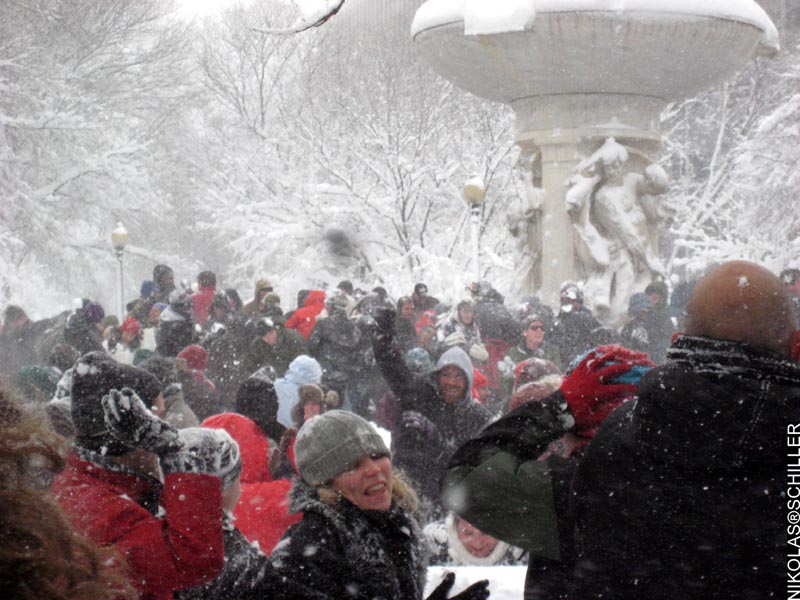
YouTube Videos & Photograph From Last Weekend’s Historic Snowball Fight In Dupont Circle
The video above contains four short video clips I recorded from my Canon SD750 on February 6th, 2010 in & around Dupont Circle in Washington, DC. The video clips show the what the snowball fight looked like when I arrived, a dance party, a fallen tree on New Hampshire Avenue, and an SUV pulling a snowboarder. The camera is rather beat up and there is a noticeable dark spot on camera lens– sorry!

|| 12/7/2009 || 8:15 pm || + Render A Comment || ||
Preview Video of the 2010 Cartographic Calendar [Color Edition]
Today I received the two calendars I ordered last week. I decided to make this short video to show prospective buyers what the calendar looks like when printed out. In the video above I simply hang the calendar on the wall and flipped through each month of the Color Edition of my 2010 Cartographic Calendar. Its a somewhat simple method of showing the maps in the calendar, but I think it helps to visualize what a 17″ x 11″ calendar would look like on your wall.
|| 12/3/2009 || 2:50 pm || + Render A Comment || ||
15th Street on YouTube || North Meets South || A Game of Locational Awareness [part 2]
On August 5th, 2008 I made the first version of this mashup, East Meets West and with the newly created contraflow bicycle lane on 15th Street NWDC, I decided to make the second version, North Meets South.
The two videos were taken from one continuous video recording that I conducted while riding on my bicycle from U Street & 15th Street to Massachusetts Ave & 15th Street and back. At home I split the videos into North & South and used the crosswalks as the starting & ending points. The object of this video mashup is to find the exact time when the two recordings pass each other on opposite sides of the street.
+ MORE
|| 11/28/2009 || 5:36 pm || + Render A Comment || ||
Pat Buchanan Prefers To Be A Colonist. I Do Not. [YouTube Video Clip of MSNBC's Morning Joe Show]
I accidentally came across this footage from the MSNBC cable show “Morning Joe” with Joe Scarborough and Mika Brzezinski. It was recorded back in February of this year on the morning after the Senate voted to approve the District of Columbia Voting Rights Act of 2009. After a short discussion, it turns out that Pat Buchanan prefers being a Colonist with taxation without representation.
©2004-2010 Nikolas R. Schiller - Colonist of the District of Columbia - Privacy Policy - Fair Use - RSS - Contact